Blog · · 4 min read
Recovery is part of performance: What firms can learn from elite sport
In elite sport, the break is part of the training plan; in the office, it is often seen as a weakness. What companies and their workplace health management can take from this.
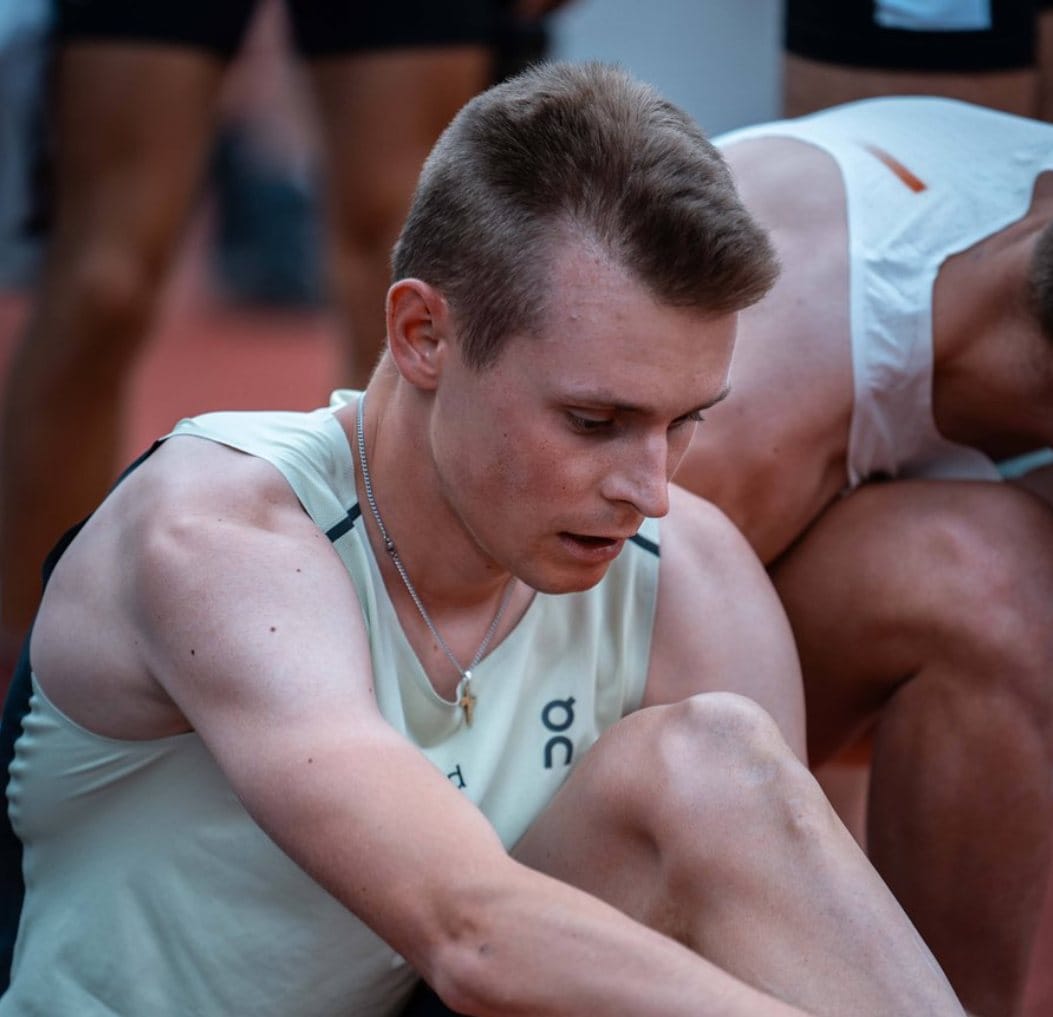
In athletics, I ended up training six to seven times a week. When people hear that, they usually think of the training sessions themselves first. What is often forgotten is the other half of the plan: recovery.
In elite sport, it is clear that performance doesn't come from training alone, but from the alternation of load and recovery. In the office, on the other hand, a break is still often seen as something you first have to earn. Since I started working as a Management Associate at a large insurer, I've noticed this difference every day.
In sport, the break is planned
A training plan doesn't just consist of hard sessions. It includes easy days, rest days and phases in which you deliberately do less. Nobody would think of calling that laziness. It's part of the plan.
I experienced this most clearly with my physio. He was usually the person who said: "Better not right now." That wasn't always easy, especially shortly before important competitions. In the preparation for the European U18 Championships, there were several moments when, looking back, I was glad I had listened to him.
For me, that was an important insight: recovery is not an interruption of performance. It is part of it.
What research says about short breaks
Of course, elite sport can't be transferred one-to-one to the office. A working day is not a training plan. Even so, there are indications that even small breaks make a difference in everyday working life.
A meta-analysis by Albulescu and colleagues, published in 2022 in the journal PLOS ONE, evaluated studies on short breaks. The result: after short breaks, people feel more energetic. Overall, there was no significant effect on performance.
I find this result honest and helpful. It shows that breaks are not a miracle cure for more output. But they change how you move through the day. And people who work with more energy are more likely to stay healthy and motivated over weeks and months. That is exactly what workplace health management is about.
A full diary needs routines, not motivation
Alongside training, I worked, studied and did military service. That was only possible with a lot of planning and time management: setting priorities, planning times, using idle time, such as the train journey, a short lunch break or waiting times.
There is a contradiction here that I want to address openly. Using idle time is efficient. But if you fill every gap, at some point you no longer have any recovery. So what helped me was not motivation, but routine: planning fixed times, for the load and for recovery. A routine holds even on days when you don't feel like it or your diary is overflowing.
For companies, this means: recovery works better when it is planned in, rather than being left to chance. If you only take a break once everything is done, you never take a break.
What companies can take on in practice
From my experience in sport and in the office, I see a few simple approaches that fit into a full working day:
- Plan load and recovery together. After an intense project phase or a long day of meetings, deliberately schedule a quieter block, like an easy training day.
- Make short breaks visible. When leaders take breaks themselves, it becomes normal for the team.
- Exercise at lunchtime. A short walk or an easy run is easier for many people to fit in than a long programme in the evening.
- Allow a "better not right now". In sport, there is the physio who puts on the brakes. In a team, that can be an open question: is this really urgent right now?
- Start small. A single new routine that holds achieves more than five good intentions.
None of these points needs a big budget. What it takes is the attitude that recovery is part of work.
Recovery as part of the culture
In the end, recovery is less a question of technique than of culture. In sport, it goes without saying that coaches plan the breaks too. In companies, this responsibility often lies with the employees alone, and the most committed ones are then precisely those who take the fewest breaks.
This is where workplace health management can come in: not with individual health days alone, but with the idea that load and recovery are one shared plan.
I talk about this in my short talk "Recovery is performance", which can also be combined with "Routines that hold" for teams with full diaries. If you are planning a health day or an event in workplace health management, feel free to write and tell me what is on your team's mind right now.