Blog · · 4 min read
Resilience: What I learned from injury and non-selection
For me, resilience doesn't mean shrugging off setbacks. What I learned from the end of a career, injuries and a non-selection.
When people talk about resilience, you often hear phrases like "fall down, get up, carry on". That sounds good and isn't wrong. But it only describes half of it.
During my time in sport, I experienced a number of setbacks: the end of my gymnastics career because of my knee, injuries, a non-selection. What moved me forward was rarely just gritting my teeth. Mostly it was something quieter.
The end that felt different than expected
I was 15 when the doctor told me that my knee could no longer cope with artistic gymnastics. I had done gymnastics for nine years, since I was six.
From the outside, it looked like a hard cut. To be honest, for me it was "actually okay". I had already lost some of my enjoyment of gymnastics. What I then missed above all was the team, the regular contact with everyone.
That was my first lesson: a setback doesn't always feel the way others expect it to. If you work with injured or disappointed people, whether as a physiotherapist, coach or leader, you should therefore ask first and not assume. What do you miss most right now? The answer may surprise you.
There was no break. That same year, I came to athletics through the UBS Kids Cup, where my talent was spotted. Two years later, I competed at the European U18 Championships in the 400 m.
Injuries are part of it – and so is the physio
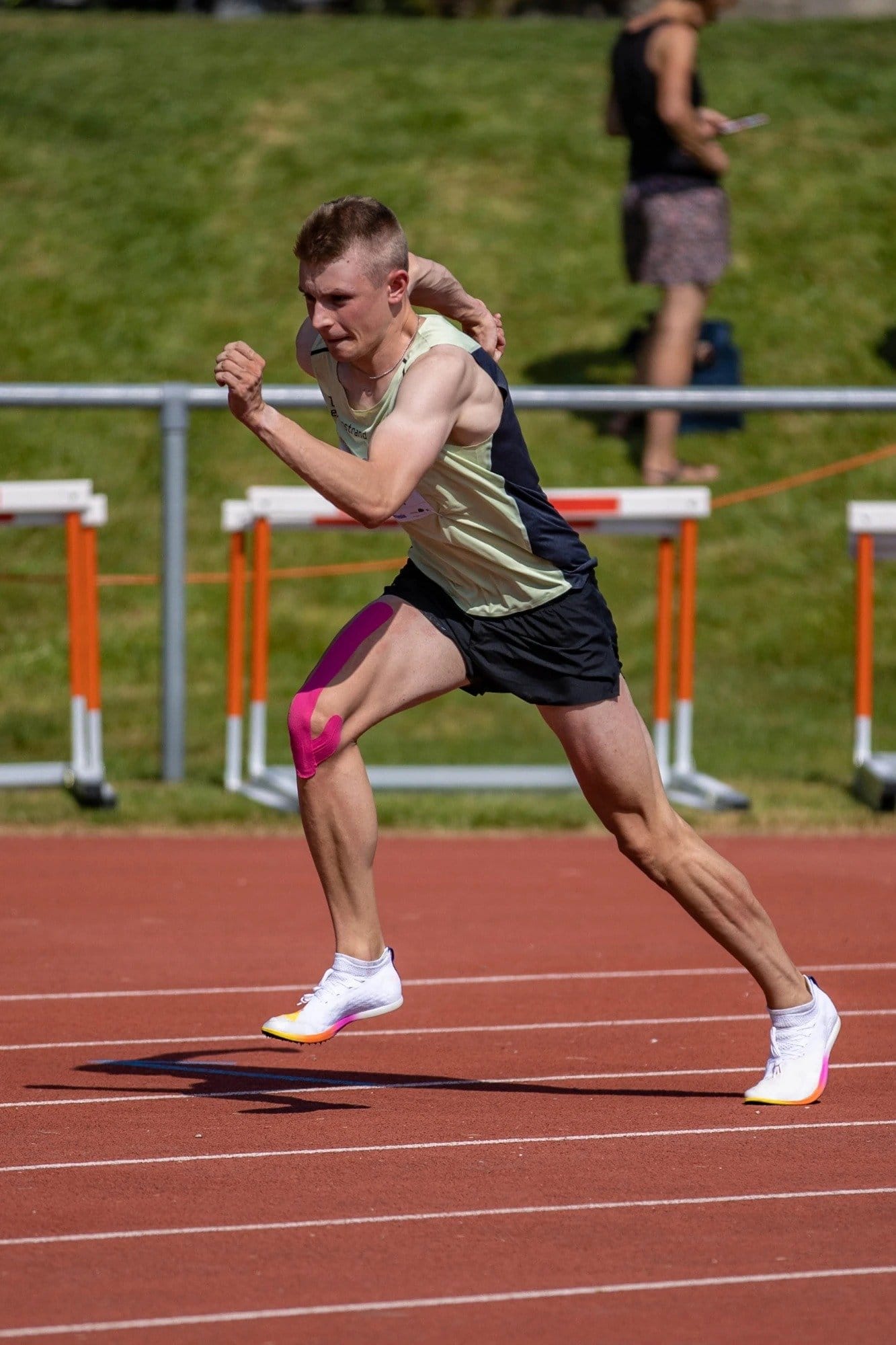
In competitive sport, injuries are part of it. That is a sober observation, not a complaint. With six to seven training sessions a week, the body is constantly at the limit of what it can take.
During this time, the physio was usually the person who said: "Better not right now." That wasn't always easy to hear, especially when an important competition was getting closer. In the preparation for the European U18 Championships, there were several such moments. Looking back, in several of these moments I was glad I listened to him.
From this I learned that resilience also means accepting an uncomfortable assessment from outside. If you only listen to your own will, you sometimes risk the next, bigger setback.
The non-selection: starting small again
A completely different kind of setback was a non-selection, for example for the European Cross Country Championships. There is no knee you can treat and no doctor who makes a diagnosis. You are simply not there.
What happened afterwards surprised even me: my motivation went up, not down. At the same time, I had to learn again to be satisfied with smaller things. Not every training session leads to a selection. But every training session can be a bit better than the last one.
I believe this is one of the most important skills after a setback: temporarily making the yardstick smaller. If you measure yourself against the big goal again straight after a disappointment, you only see the gap. If you set smaller milestones, you see progress.
When the big moment doesn't quite come off
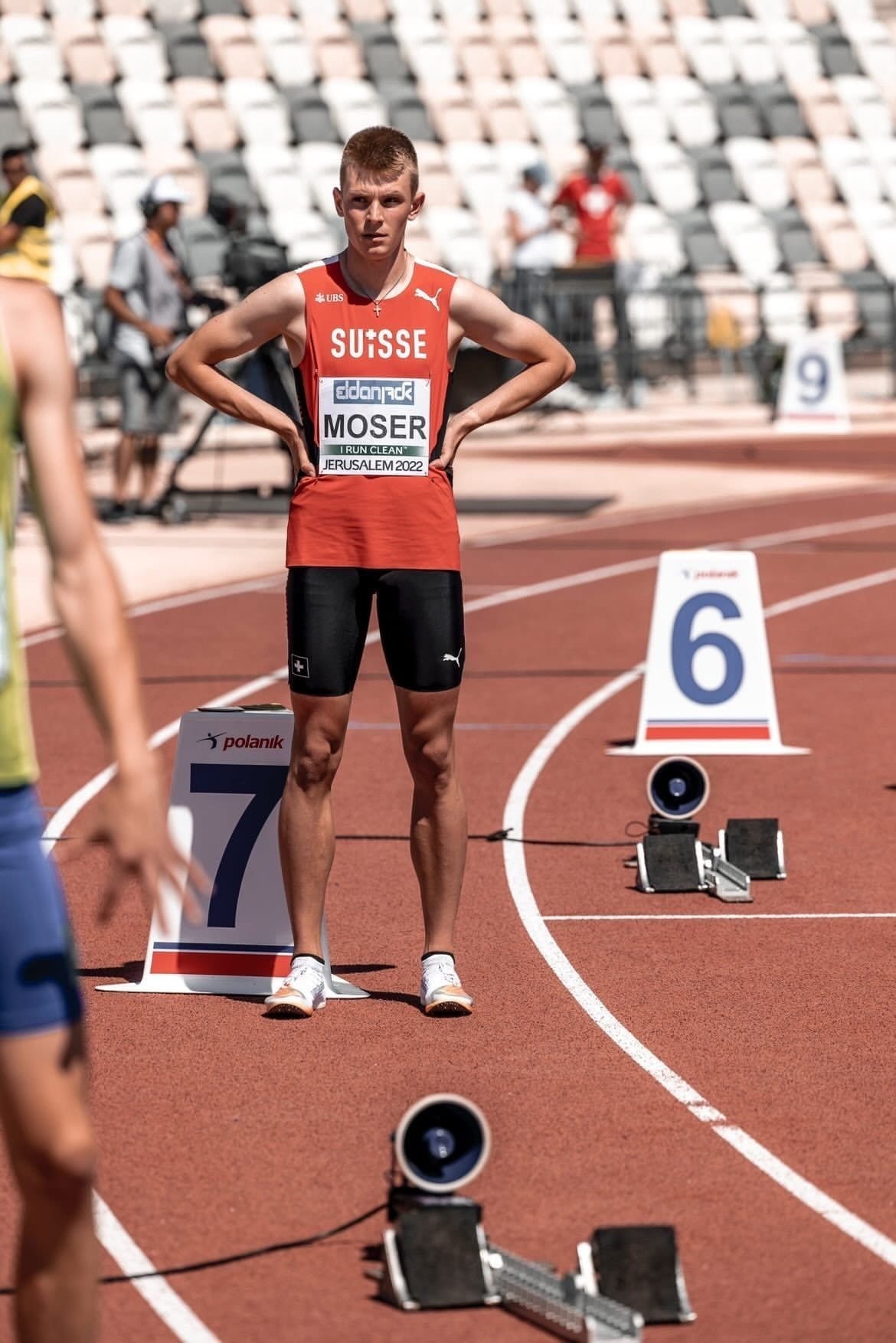
The European U18 Championships 2022 in Jerusalem weren't pure fulfilment either. After two years of preparation, I wanted to deliver on the big stage. It was very hot, I was nervous, and in the end I ran roughly the fifth-fastest time of my season.
That wasn't a dramatic setback, but one that many people know: you work towards a moment for a long time, and then you don't quite show what you can do. What helped me was a habit that is still with me today. Before I ask others for feedback, I give myself feedback. What went well? What was the pressure, what was the heat, what was in my hands? Only after that comes the coach's view.
This order helps me neither to gloss over a setback nor to dramatise it.
What I take from setbacks
When I sum up my experiences, four points remain for me:
- Ask rather than assume. A setback feels different for everyone.
- Take uncomfortable voices seriously. The physio's "better not right now" was often the most valuable thing.
- Temporarily make the yardstick smaller. Small progress keeps motivation alive.
- Reflect yourself first, then ask for feedback. That turns a disappointment into a learning loop.
For me, resilience is not a trait you either have or don't have. It grows out of many small decisions, often precisely when you don't feel ready yet. And it rarely grows alone: behind me were my training group, physio, family, club and coaches.
I talk about these experiences in my talk "Courage before it feels safe" for teams and leaders, and in the short talk "From injury to the U18 Europeans" for continuing education in physiotherapy, medicine and sport. If you are looking for an honest inside view of setbacks for your audience, I look forward to hearing from you.