Blog · · 4 min read
Elite athletes as speakers: What to look for when choosing one
Sports stories are popular, but not every one suits every event. Six criteria for choosing – from the perspective of a former athlete who now speaks himself.
Athletes are popular as speakers. The stories are tangible, the emotions real, and almost everyone in the audience can remember a competition of their own, even if it was only sports day at school.
Even so, not every sports talk is automatically a good talk. Some are entertaining, but no longer trigger anything the next morning. Since I started speaking myself, I often ask myself: what makes a sports talk good rather than just nice?
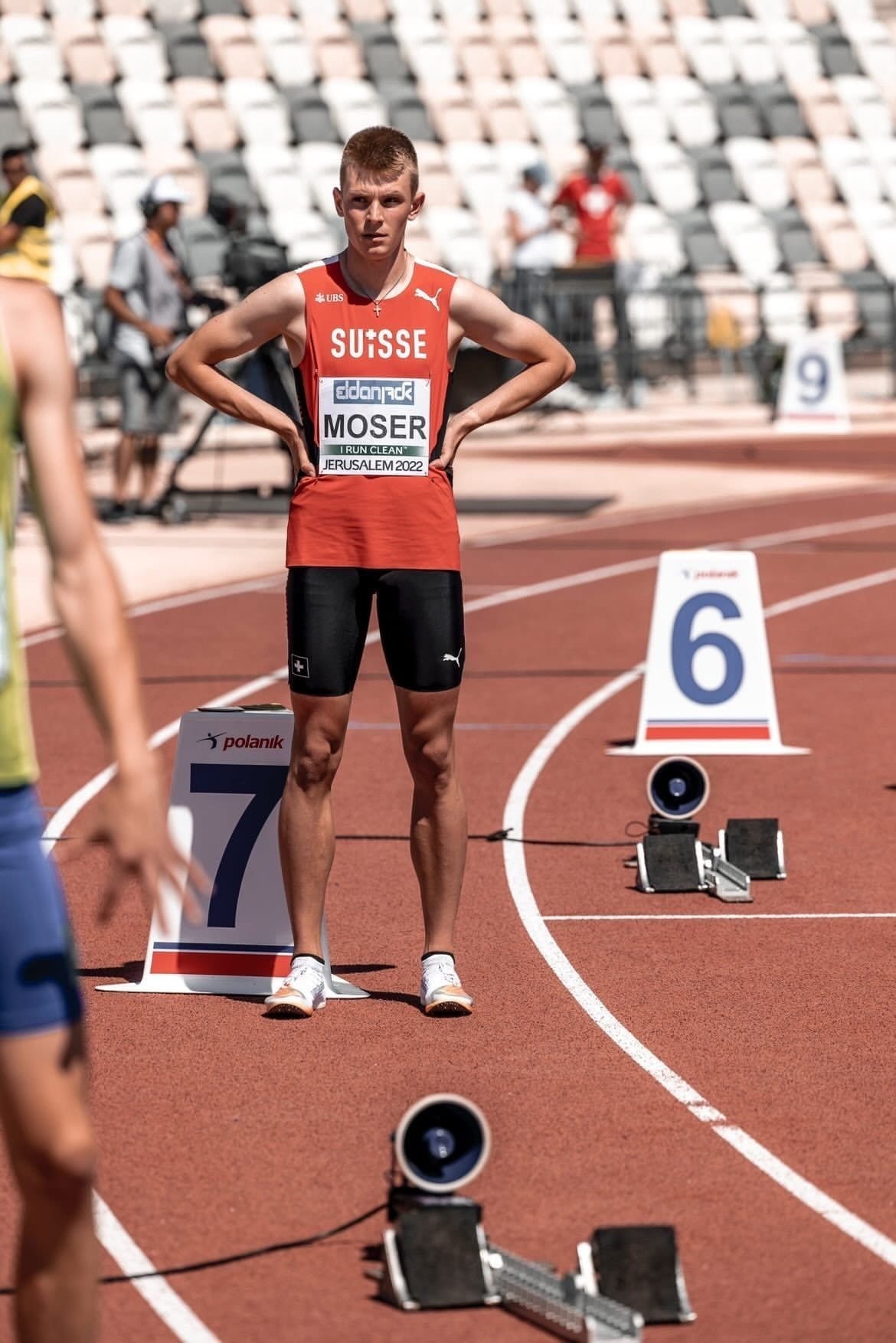
I have nine years of artistic gymnastics behind me, followed by athletics from 2020 to 2024, with the European U18 Championships in the 400 m and eight medals at Swiss Championships. Today I work as a Management Associate at a large insurer. From this dual role, I'm sharing here what I would look for when choosing if I had to organise an event myself.
The transfer counts more than the medal
For me, the most important criterion is the transfer. A medal impresses for five minutes. What stays is the question the audience takes home with them.
So in the briefing call, don't just ask: what have you achieved? Ask: what should our audience do differently afterwards? A good speaker can answer this question concretely. In my case, for example, it is the distinction I learned after switching from gymnastics to athletics: what do I take with me, and what do I have to retrain? This question works in a transformation just as well as in an apprenticeship.
Honesty rather than a hero's story
The strongest moments in sports stories are rarely the victories. They are the moments when something doesn't work out.
For example, I openly tell how my European U18 Championships in 2022 in Jerusalem didn't go quite the way I had hoped. After two years of preparation, I ran roughly the fifth-fastest time of my season. It was very hot, the stage was big, I was nervous. It's not a story of triumph, but one in which many people recognise themselves: you work towards a moment for a long time, and then you don't quite show what you can do.
Watch whether a speaker allows for moments like these. If someone only talks about successes, they quickly seem far away. Talking about setbacks as well creates closeness, and that is exactly where learning happens.
The connection to the audience's world
A sports career alone does not make a good talk for a corporate audience. What matters is whether the speaker knows the audience's world.
It helps me that I experience both sides: the starting blocks and the meeting room. I work in teams where most others are over 50, and I present to the executive board. In doing so, I've learned something that doesn't come up in sport in the same way. A good idea alone is not enough. Communication and stakeholder management are often decisive.
So ask: how does the person know everyday life in your industry, your school or your association? And how do they adapt their examples to it?
Six questions for choosing
To sum up the points, these are the questions I would clarify before booking:
- Goal: What should the audience think or do differently after the talk?
- Transfer: How does the speaker translate their story into your audience's everyday life?
- Honesty: Are setbacks and open questions included too, or only successes?
- Fit: Does the person speak your audience's language, whether managers, HR, apprentices or specialists?
- Format: Do you need a keynote in the hall, a short talk, an interview or something active like an outdoor workshop?
- Preparation: Does the speaker take time for a briefing call and adapt the content?
One more practical tip: clarify the language, too. I give my talks in German or Swiss German, for example. That is an advantage for most events in German-speaking Switzerland, but important information for an international audience.
Courage is not a talent
One topic that often comes up in sports talks is courage. Unfortunately, it tends to be presented as a trait of exceptional talents. That doesn't help the audience much.
My experience is different. After the end of my gymnastics career, the new beginning took more courage than carrying on would have. At my first athletics training session, I was told I ran like a ballerina, with pointed toes, typical of gymnasts. A lot was unfamiliar. I kept going anyway.
Joining the board of the Central Swiss athletics federation was a similar step. I approached the board myself instead of waiting for someone to ask me. Courage often comes about precisely there: before it feels safe. A good talk shows how to make this first step smaller in everyday life, instead of glorifying it.
If you are looking for a speaker from elite sport for your event, my topics "From elite sport to business" and "Courage before it feels safe" fit the bill. I'm happy to discuss with you in a short call what your audience should take away – and I'll also tell you honestly if a different format would suit you better.